About St. Wenceslas and September 28 in the Czech Republic
Sep 27, 07:25 Filed under history
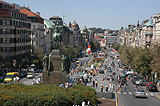
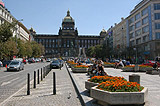
You can’t visit Prague without bumping into St. Wenceslas, in Czech Svaty Vaclav. There is St. Wenceslas Square, which is probably the most important square in Prague because here take place all big demonstrations – last most significant was during the Velvet revolution in 1989 against communism.
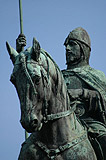 On Wenceslas Square there is a statue of St. Wenceslas on a horse, which is by the way a great meeting point and a must for every tourist. In Prague Castle you can find Chapel of St. Wenceslas in st. Vitus Cathedral. Czech crown, a great symbol of Czech Republic, is called after St. Wenceslas as well. There used to be a 20 CZK banknote with his portrait, now it is however replaced with 20 CZK coin. St. Wenceslas is simply everywhere.
What is so special about him?
He is a patron saint of Bohemia, and so every time when the Czech nation was in a stew, Czechs prayed to St Wenceslas to help them. An old legend says that a huge army of knights sleeping inside some mountain in the Czech Republic will awake under the command of St. Wenceslas to help Czechs in time of ultimate danger. And since the Czechs had to go through both First and Second World Wars, Hitler’s rule as well as Stalin’s control without the help of St. Wenceslas, one may only wonder what an ultimate danger is going to be like!
 But why Wenceslas? Who was this famous guy who ordered to build the future St. Vitus Cathedral on the Prague Castle? Was he real?
He is known in the English speaking world as the subject of the Christmas carol “Good King Wenceslas” – yes, it is the same Wenceslas as the one on the Wenceslas Square – Duke of Bohemia, born in 907.
Wenceslas was raised by his grandmother, St. Ludmila. She was a kind and a wise woman, and Wenceslas loved her dearly. When he became the Duke, he listened to her advices carefully and fulfilled many of her wishes. This, however, made the mother of Wenceslas very jealous. She wanted to suppress the influence that Ludmila had on her son, and wished to rule herself. So she ordered to kill her mother-in-law! St. Ludmila was strangled when asleep!
 This angered Wenceslas and had his mother exiled. And ruled happily till he was murdered by his younger brother who was power-mad! Wenceslas was hacked to pieces on his way to church in 929 or 935. His beloved brother became his successor. Oh, those medieval times!
After his death, Wenceslas was canonised as a saint due to his martyr’s death, as well as several purported miracles that occurred after his death. His feast day is September 28, and since the year 2000, this day is a public holiday in the Czech Republic – celebrated as Czech Statehood Day.
You can see St. Ludmila, the grandmother of St. Wenceslas, on the statue of St. Wenceslas. She is standing on his right. Around her neck is what she had been strangled with.
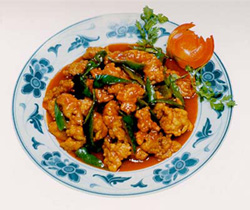 Chinese cuisine is representing one of the richest cuisines in the world. It comes from different regions of China and has become widespread in all parts of the world – you can find Chinese restaurants nearly in every country! It is known that Chinese cuisine made outside China differs significantly from the original, but less is known about it’s differences from country to country. So why not to try the Czech version in?
 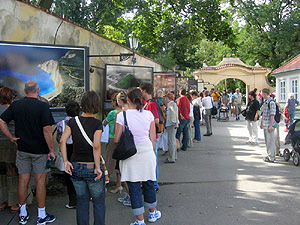 You so have to see this! I am not exaggerating when I say that this is the best
  This Arthus-Bertrand´s exhibition has already been to about one hundred cities around the world. So far, nearly 60 millions of people have seen it. Arthus-Bertrand´s aerial photos bring us really unusual view on things. He documents the endless beauty of Earth and shows us how small we are compared. It is truly fascinating to see all those magical colours!
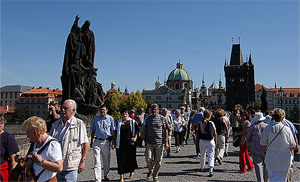 As a tourist in a foreign city you may come into a situation where you will need help but your clever guidebook will stay silent and your mother will be miles away. What to do then? Well, first of all, don’t panic! You can solve this on your own. Just ask a local!
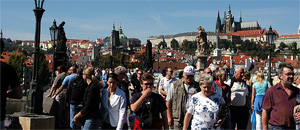 Praguers in their thirtieths and fortieths should be able to help you too. However, don’t forget that for forty years, during the communist era, English was not the language number one to be taught in the Czech Republic. It was Russian.
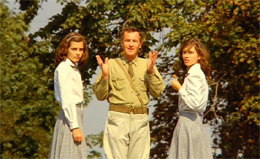 Have you seen any Czech movie? Probably not and that’s a pity. Don’t you think that once you are actually
 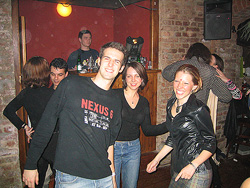 After the sunset, it´s the time to explore another side of Prague.
 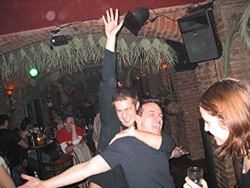 Aloha Wave Lounge, as the full name reads, is a stylish café, restaurant and cocktail lounge, ranging from thirties to the sixties. The food there is really exotic, but so are the prices for it. Nevertheless, the drinks are for reasonable prices and I won´t exaggerate if I say they make the best cocktails there maybe in the whole Prague. And trust me, they offer a tuns of cocktails! Just to name some of them: Daiquiri, Pina Colada, Mojito, Caipirinha, Bloody Mary and so on.
 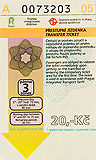 As tourists are usually mad
 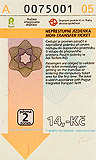 So why to risk the unpleasant acquaintance with the controller?
 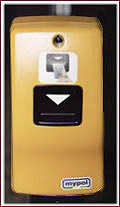 When on the tram, bus or when entering the subway station, don´t forget to mark the ticket! Holding a ticket that is not marked is the same as travelling without one!! So don´t fail to put the ticket into the little yellow box inside the bus, tram or when entering the metro station.
 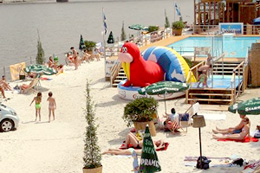 During hot summer days like those we have right now back in