Great advertising campaign of Czech non-alcoholic beverage in Prague
Apr 2, 09:09 Filed under culture
Kofola a.s. organized sampling of their tasty non-alcoholic beverage Kofola in the streets in Prague in summer 2006. This company produces non-alcoholic beverages in the Czech Republic. The most famous drink Kofola is considered as well-known and favorite beverage among Czech customers.
 Kofola used for their promotion a tram with logo of Kofola. This tram took people around Prague for free while hostesses were offering these people a refreshing beverage Kofola in the tram or at tram stops for free as well. There were also other people participating in Kofola promotion. These people were having in-line skates, and they were offering their beverage to the consumers in the streets of Prague. The aim of the promotion was to provide people with great refreshment during hot summer days, and it also worked as a reminder of this brand. They wanted to remind the customers of their great brand name Kofola, and they also wanted to remind of great taste of popular traditional Czech beverage. This promotion campaign succeeded because people started talking about Kofola tram and about company’s hostesses. Consumers started purchasing more Kofola as a refreshment during hot days. This campaign was also mentioned in newspapers.
The target group in this case were people who live in Prague. The aim of Kofola company was to provide refreshment during hot summer days to all age groups. The highest impact should Kofola have had on young generation – teenagers. Teenagers often prefer to drink beverages like Coca-Cola or Pepsi. Kofola was trying to appeal as a cool beverage; therefore the company used the guys on in-line skates, so that this beverage would be perceived as a popular among teenagers.
 There would be little to complain about weren’t for the jury’s decision. The project itself is bizarre and its setting is controversial. But it was the magistrates who held the competition, they chose the form and they should respect the result. If you set an international jury to decide over a project and it chooses a winner, not to say that well, you don’t like the chosen project so let’s do it some other way. If the location is the problem, and there are probably more convenient locations in Prague, why did the magistrates chose it in the first place? The projects were all meant for the Letná plain, taking it into account. A decent architectonic project cannot be moved into a different environment.
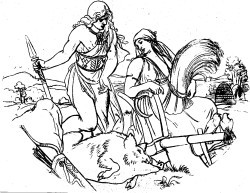 Mikolas Ales is one of the most important and well-known Czech artists. Now you have a change to see his works at the big retrospective exhibition called Mikolas Ales 1852 – 2007, which is being held in the
  I believe most people would agree that
 Starbucks opened its first café in the Czech Republic in January 2008. The café is situated in
 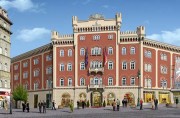 Supermarkets are already seen as small and uncomfortable, hypermarkets are spreading around the capital and the whole Republic, but their focus on certain goods makes them a limited source. What Prague center lacked was a large shopping center with different kinds of shops, cafés- at least in this big a form. It’s a question whether the gap was needed to be filled or not (I personally don’t think so), but the fact remains it was.
  There is an urgent need for a new building of the Czech National Library as the old building of Klementinum is not sufficient any more. So there was organized a public competition for a new building design. Any architect interested could have participated. The jury was international, its chairman was a prominent architect Eva Jiricna, very important personas of contemporary architecture world were among its members, such as Zaha Hadid, Irene Wiese-von Ofen, John Eisler and others.
 The question about the library should have been solved by the end of last year, but it is still opened now. The problem is to be solved in the cooperation of the architects, politicians, lawyers as well as conservationists. Jan Kaplicky even said that he might consider to put a charge to the international court if his design would not be accepted. And there is also not answered the question if there are money for this building at all. The cause looks now quite as a too long played tragicomedy with no end in a short time.
 In 2008, the world will focus the attention towards the Olympic events in Beijing. In 2012, everyone will be watching the Olympic Games in London. In 2016, could it be Prague? Is this city the right candidate for the Olympics? Is the Czech Republic ready for Olympics preparation?