Prague Blog

Love – Desire – Passion - Exhibition

14 hours ago Filed under prague-events

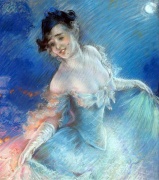
There is an attractive exhibition now in Prague. The name itself is already appealing – it is called Love – Desire – Passion (Laska – touha – vasen in Czech) with a subtitle which specifies what visitors of this exhibition will see – the subtitle is Erotic Themes in 15th to 19th Century Art.

The exhibition takes place in exhibition spaces of the Clam Gallas Pallace in Husova Street and was prepared by Prague City Archives and National Gallery in Prague in cooperation with the Museum of Decorative Arts in Prague.

Love, desire and passions fascinate humans since the beginning of ages, some ways how those themes were depicted in European western culture from 15th to 19th centuries can be seen on the exhibition. The exhibition does not really try for some “higher intellectual aims” – as to come with new discoveries in the field of Art history. The main aim is to make an attractive event for visitors, who can enjoy beautiful pieces of Art, sometimes even quite provocative ones. Although, there are some pieces, which are exhibited on the public for the very first time, because of their provocative topic.

As love, desire and passion can exist in many different ways, love for example – a big difference between a lover of a mother to her child and a love of passion lovers. So the pictures shows love in many different situations as well. There is shown idealistic motherly and daughterly love (Charitas), famous stories of biblical and mythological love, but also moralizing genres and even erotic fantasies. All that with emphasis on the works of Italian, German, French, Dutch and Flemish masters. There are mainly paintings, but also some examples of other techniques – sculpture, drawing… and probably the most interesting for visitors – graphic. In the technique of engraving because of its intimate nature has always allowed more openness. There are to be seen for example works of British Artist named Aubrey Beardsley, who made very erotic illustrations to antique comedy Lysistrata (written by famous Aristophanes, the story is about women who decide to stop pleasing their men unlit they stop their fights). It is said that Beardsley did not want this illustrations to be preserved after his death, but they were and now you can enjoy watching them. Among other famous Artists whose works are exhibited on Love – Desire – Passion exhibition can be named Albrecht Durer, Fransisco Jose Goya de Lucientes or Joos van Cleve. And there is also a separate section which shows works done by Czech Artists of 19th century as Josef Manes, Vaclav Brozik, Vaclav Hynais and so on.

So if you feel for enjoying some culture and Arts in Prague, this might be a way you could like. The exhibition is opened from 29th of April until 31st of August 2008, daily, with the exceptions of Mondays, from 10 am to 6 pm. Entrance fee is 100 Czk full price and 50 Czk reduced. The Clam Gallas Pallace is situated in Husova Street number 20, it is in the city center, not far from Staromestska Metro station.

Comment

The most expensive Czech film ever now comes to cinemas - BATHORY

14 hours ago Filed under culture

Director Juraj Jakubisko finished the most expensive film which was so far made in Czech cinematography. His drama and historical movie is called Bathory ad tells a story of Elizabeth Bathory (Ersebet Bathory), a Hungarian countess who lived in today´s Slovakia in 16th/17th century. In those times, Slovakia was a part of the Kingdom of Hungary. Elizabeth Bathory is very infamous for murdering and torturing her vassals. She is also said to kill many innocent young girls to get their virgin blood, which she believed should help her to preserve her beauty. But now, for almost hundred years later, historicians´ opinions about her and her life are not that uniform. Some say that she got extremely rich and independent, and thus become a target of jealousy and then evil machinations of her enemies. So who really was she? An evil murderer or an extraordinary well-educated and rich woman, a lonely widow. Was she an aggressor or a victim? Or both? Now, after release of the movie, we can expect more discussions on this topic.

The Jakubisko´s film was already well discussed even before it started to be made, then shooting finally started in December 2005 and now, in June 2008 the film was finished.

The movie already had its V.I.P. premiere, it was 28th of June in Bratislava, the capital of Slovakia. The Czech premiere was on Saturday 5th of July in Karlovy Vary, where famous international film festival takes place. Czech and Slovak cinemas start screenings of the film from 10th of July.

Director of the Bathory movie, which was also intended to be called Love Story Bathory, is, already mentioned, famous Slovak Juraj Jakubisko, who did many good films since 1960´s when he graduated at Film Academy in Prague. This year, in Film festival in Karlovy Vary, he also received a prize for his lifelong contribution to cinematography.

The film with budget of 10 000 000 Euros, which makes it the most expansive film in the history of not only Czech, but as well Slovak cinematography, was made in international coproduction of companies from the Czech Republic, Slovakia, Hungary and United Kingdom with additional funding provided by European Union´s Eurimages, the State Czech funding for cinematography (Statni fond CR pro podporu a rozvoj ceske kinematografie) and the Ministry of Culture of the Slovak Republic.

English actress Anna Friel stars as Bathory, and there are many other popular faces as actors appearing here – as Juraj Jakubisko´s wife Deana Horvathova, Italian actor Franco Nero or popular Czech actors as Karel Roden, Lucie Vondrackova, Bolek Polivka or an idol of some teenagers Jiri Madl.

Comment

Czech Juggling Convention Prague

2 days ago Filed under culture

If you like juggling and street art, there are some good news for you. From 24th to 27th of July there is going to be 8th year of Czech Juggling Convention and Street Festival in Prague. It is, as organizers states, a big celebration of juggling, acrobatic, new circus and other street art forms. Not only Czech people will be performers, the event is international. It consists not of performances on streets of Prague, some workshops, but also evening programs, lectures and gala shows.

It was also announced, that this year the festival is focused on diabolo and contact juggling, fussion in between dance and juggling art and exploring of francophony juggling and also new circus scene. That sounds quite interesting, and juggling seems to be a good summer outdoor activity, so why not to get to learn something new about it.

More information about the project in English language is to be found here From what is written here it seems, that the program is still not much fixed, but on the other hand they ask those who would like to perform something to contact them, so maybe you still have a change even for this year…

Comment

Angels sleeping - Gottfried Helnwein in the Rudolfinum Gallery

7 days ago Filed under prague-events

Works by Austrian artist Gottfried Helnwein are now to be seen in the Rudolfinum Gallery on the exhibition entitled Angels sleeping. He is a phenomenon in a field of hyperrealistic painting. Working in a technique of oil and acrylic painting, he makes extremely precise canvases of a big measure, based on photographs. Their topics are taken from history as well as from pop-culture and he also often deals with theme of a child in extreme situations. The realistic look of painting is startling; he is very precise and technically extremely skilful. But the paintings look bit too strange… well, but I let you to make your opinion on your own, after the visit of the exhibition.

The exhibition in Rudolfinum is divided into five sections. Firs one shows portraits of the artist’s bandaged face, in the second part are paintings with references to the Nazi past of Austria, both the third and fourth sections have a child in different strange situations as their central subject. The fifth part differs from other ones, as it consists not of hyperrealistic paintings, which look almost as photographs, but it consists photographs itself – showing Marylin Manson as a strange icon of popculture.

Some of works exhibited here are loaned from the property of Gottfried Helwein, some from both public and private collections, and there is a big and representative among of them. I did not really like them, but if you are into hyperrealism, you definitelly should see it. Also it is worth to know, that exhibitions in Rudolfinum are always quite important, as it is one of top exhibiting places in Prague.

The exhibition is to be seen from 11th of June to 31st of August. The Rudolfinum Gallery is opened daily except Mondays, always from 10 am to 6 pm. The entrance fee is 120 Czk full price and 60 Czk reduced fee (students, seniors), children under 15 years old are for free. The Rudolfinum Gallery is accessible form Alsovo nabrezi, but is located in the Rudulfinum building, which is located on Jana Palacha Square, best accessible form Staromestska or Malostranska tram stations (both green line) or eventually also from bus or tram stations (Staromestska – trams 17 and 18, Malostranska – 12, 18, 22, 23, 12, 20).

Comment

Summer holidays just started!

8 days ago Filed under culture

On Friday started summer holidays for most of Czech students of basic and high schools. As a school year in the Czech Republic officially finishes 30th of June every year, this time most of school directors decided not to wait until Monday 30th and finished already on Friday 27th, so students have their holidays a little bit longer. As well as their teachers. Now they can enjoy full two months of summer holidays – July and August.

On Friday they got their school reports: in the Czech Republic is used five degrees marking system – students‘ achievements in particular subjects are classified by marks from one to five. One (excellent) is the best mark, while five means failed and student has to repair it at the end of holidays. It is a customary that for their last day of school year students dress well, but lately this custom is often being abandoned. But what stays is a custom to bring some flowers to the teacher (most of Czech teachers, especially at basic schools are female), eventually good chocolate. When teacher gives a report to the student, she/he gets the flowers. And on the afternoon many parents take their kids for ice cream or give them some presents, often also money as a reward for good schoolwork during the year. And then they can go for holidays, although most of high school students also take some summer work to earn some money for their personal expenses.

During summer holidays, some trams and bus schedules are changed, the buses and trams do not have to go so often as during the school year. But there should be a notice on the tram/bus stop.
And after the holidays, school officially starts on 1st of September, which is on Monday this year.

Comment

Famous Prague parks

21 days ago Filed under nature

Now, during nice and sunny days, the great thing to do is to take a walk in a lovely park. There are few of them in Prague and it is really worth it to go for a walk in one of them, to enjoy the fresh spring green of trees and grass and to admire different kinds of amazing blossoming flowers of various kinds and colors. Plus, you obviously do not need to walk all the time, you can take your bike, in-line skates, skate board or you can play some game in the park – whatever if it is a Frisbee or petangue. If you have kids, there are various playgrounds, which they should like. And if you are thirsty, in the best Czech parks there it is always close to a refreshment place where you can get your cold beer.

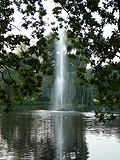
So which of Prague parks are the best? There is Stromovka – huge park, recently renovated. It was quite destroyed because of the flood, which was in Prague in the summer 2002. “Strom” means a tree in Czech language and there really are lots of trees, but there are also beds with flowers, water fountain, a lake with ducks… Stromovka was originally founded as a king´s hunting park, already in 1268, during the reign of Premysl Otaker II. In the turn of 15th and 16th century there was built a small castle, its today´s look comes from 19th century, where it was used as the summer residence of Czech vice-regents. But there are other interesting buildings in Stromovka, for example in 1961 was built here an astronomical observatory. But the park is mainly the favorite place, where Prague inhabitants spend their free time in the fresh air, surrounded by trees.

Not far from Stromovka is a park called Letenske sady (which in English means Letna Gardens). Here used to be a famous huge statue of the infamous dictator Stalin. Later was on this place put a huge statue of Metronome. And from the Metronome you can enjoy amazing view over Prague with Vltava River and all that amazing Prague towers, churches, palaces and other builidings. There are a lot of flowers planted in Letenske Sady, at this time exceed especially beautiful tulips of different shapes and colors. Plus, here is a popular beer garden with a beautiful view over Prague, or you can ask for beer in a plastic cap and enjoy it while walking through park or on some of plenty benches.

But probably the most famous of Prague parks are Petrinske Sady (Petrin Gardens) – according to the tradition, the ideal place for lovers. There is even a statue of their “patron” – a Czech poet Karel Hynek Macha, an author of very well-known poem Maj (May), which is an obligatory reading in almost all Czech high schools´ literature lessons. In Petrin is also a beautiful Rose Garden and popular mirror maze, lookout tower, Stafanik´s observatory, Memorial to the victims of Communism. And if you do not want to climb up on the Petrin hill, you can use Petrin funicular, a special mean of Prague public transport.

Those mentioned above are obviously not the only Prague parks, but are definitely the most famous. But maybe you will also like to discover other ones, for example Riegrovy sady with beer garden popular among Prague ex-pats.

Comment

Czech Transformation which started in 1989

21 days ago Filed under history

One of the key issues after 1989 was how to kick- start the Czech economy. The 1980’s were not hungry years, but the production was narrow and the technology lagged behind the West considerably. As the regime collapsed and, symbolically, Václav Havel took over the presidency from Gustáv Husák, the father of “real socialism”, the West was open and friendly towards the newcomer. George Bush Sr., Rolling Stones and other celebrities rushed in to congratulate the new- born democracy.

But a warm welcome and a wish of good luck didn’t mean a fierce competition won’t start. The market economy is not built on sentiments and everyone knew the republic has to get on its feet as fast as possible. The question was how.

One option was to privatize and set up competitive environment as quickly as possible. The other was that rules must be set first. Václav Klaus finally pushed through the first concept, after disputes with, for example Waltr Komárek, who advocated the second way. That is interesting also because Komárek was his former boss at the Institute for Prognosis, which was regarded as the sole base of centre or sometimes even centre- right economists towards the end of the regime.

The transformation was difficult and accompanied by large losses. Quite a number of entrepreneurs abused the chaotic system and “tunneled out” (a Czech term for a specific form of embezzlement) billions of state money. This is what the opponents of Klaus charge him of: he allowed the system to be built while working, not in advance. He started the free enterprise without setting proper rules, without strengthening mechanisms of control and so those who wanted to steal had a user- friendly environment. He shares responsibility for the losses.

What the defenders of “Klausformation” would reply is: if rules were to be set, if mechanisms were to be built before the free enterprise was allowed, it would have been worse. It would take years and nobody would wait for the Czechs to recover, we would end up like a poor Eastern state with clean, but weak economy.

There is no easy answer and the question is still there. Last time it was re-stated was during the presidential election, where Klaus and Svejnar disputed about it, among other things.

At this moment the Czech economy is doing well. There is a lot of foreign investment, job growth, the crown is strong. The largest former embezzlers are hiding abroad and most people seem to have forgotten about them. Everyone knows the “wild nineties” are gone.

Comment

Permanent Exhibition of Asian Art in Zbraslav

28 days ago Filed under prague-events

Although Zbraslav is a part of Prague, it feels more like a small town of central Bohemia. But being down the river, on the South of the city, it’s still accessible by the city public transport. That’s from the left side where Smíchov or Hradcany lie, while on the opposite side a biker may take a route from Modřany up to the place, going along the river bank.

The chateau hosts a permanent exhibition of Asian art. The ground floor is mostly Japanese. Every room is supplied with a thorough, well- written commentary in Czech and English; each room is mostly devoted to a single theme, period or a major technique. The various influences are interesting, for example the similarities between 19th Century Japanese ceramics and the European art noveau decorations, or the very early hints of the comic- book style of drawing. There are some very old sheets with of a storyboard- like character, where a series of pictures tells the story of an ancient legend, the short comments written on a side.

The Chinese part is on the second floor. There you may see a quick walk through the country’s art from simple artifacts, buried with the deceased or later statues- guards of tombs to examples of Middle Ages and Modern Times painting and Buddhist sculptures. Buddhism naturally plays an important role in all parts of the exhibition. The supplied commentaries also provide a brief, but competent overview of Chinese history, as it is reflected in the creations of the eras.

That is, including the last one, which consist of a mixture of other Asian regions. Examples of Indian, Indonesian… consist mainly of Buddhist religious and ritual objects. There is also a room with an exhibition of Asian Moslem artifacts, for example old prayer rugs. The Japanese and Chinese sections are far richer, but this does provide certain wider framework. I would recommend to end the visit in this one, although the order is purely voluntary.

Not that this would be all to see. There is also a temporary exhibition of Korean art. But the permanent one is unique considering the number of objects owned by the National Gallery. Apart from paintings and drawings there are lots of various boxes, dishes, vases, sculptures of various shapes and sizes, even some toys; generally a wide range of art both religious and decorative.

Comment

Aquadream - aquapark in Barrandov

28 days ago Filed under sport

Quite recently, there was opened a new aqua leisure center in Barrandov Prague district. It is quite small “aquapark”, but quite pleasant and thus offers a nice way how to spend your free time, especially with children. There are two quite long toboggans, one classical whirpool with hot water and a kind of pool with something like “a bit wild water”, plus there is a normal pool of 25 m in length and a small pool for little kids. So every member of the family can find here something he or she likes.

There is also a bar, they call it “water bar” because it is in the “water area” so you can refresh there during your water activities. Plus after you leave from there, there is another bar close to exit/entrance so you can also refresh yourself here, as well as to eat something. In the summer season, there is opened a meadow for sunbathing and a playground for a volley-ball.

I went to the Aquadream with my friends on Friday evening last week, and I quite liked it there. It was fun to go on toboggans (and they are quite save because there is a light system which avoids people to hit to each other on the way, you can take your ride only when the green light is on), and the whirpool was very relaxing, just to be have a rest and chat with friends. Only the swimming pool is pretty small, so it is not really suitable for some “big swimming”. Unfortunately the bar by the cash desk, at the entrance/exit room was already closed when we were leaving so I do not know much what they offer and it is good, we just bought some biscuits in the automatic machines, which are also there. And they also have vapor rooms, but we did not try them on Friday, maybe next time.

The opening hours are from Monday to Friday from 6:00 am to 11:30 am limited operation (only some attractions are opened) and from 11:30 am to 22 pm all of them work. On weekends the center is opened from 8:00 am to 22:00 pm with full operation the whole day.

And what about the entrance fee? Children under 3 years are for free. And the others: during the hours of limited operation, it is for 73 Czk for 100 minutes, during the full operation it is more complicated. Adults are for 79 Czk for 60 minutes, 136 Czk for 100 minutes and 199 Czk for 190 minutes. Students, seniors and disabled and children up to 15 years old are for 53 Czk for 60 minutes, 93 Czk for 100 minutes and 115 Czk for 190 minutes. Plus there is a possibility to buy a family ticket for 199 Czk for 60 minutes or 359 Czk for 120 minutes (and a family must consist of maximum of 5 persons, only two of them can be adults) and cheap are Mondays, every Monday, the entrance fee is for anyone for 63 Czk for 100 minutes. But it should be also noted that there is no more time for changing and so on. So since you buy your ticket the time is running, so one hour is not usually not enough, because in that hour should be also included time for changing before and after as well as some time for drying.

And how to get there? It is in short walk distance from the tram stop Sidliste Barrandov, so you can there for example from Malostranska, there you take tram 12 and go to the end station.

The information on Barrandov Aquadream Here

Comment

Czech presidents

35 days ago Filed under history

On February 15, Vaclav Klaus was re-elected as a president of the Czech Republic. He is the person, which is sympathetic for some ones and (very) non-sympathetic to other ones. He is quite controversial not only because of his opinions about the global worming and his claiming that ecology is not that important at all and so on. It is quite a pity that such an important person, as the Czech president is, do not take ecological problems more seriously. He does actually the contrary – belittle them.

He holds the post of the Czech president since 7 March 2003. But do you know who were the presidents before him? Yes, Vaclav Havel, the first president of democratic Czechoslovakia, is pretty well know. But how about the others?
The very first president of Czechoslovakia was Tomas Garrique Masaryk. A man, who was later often remembered for his strong character and for the popularity he had among the people. The times of his rule were later remembered as the golden times of this country, when there was a democracy and Czechoslovakia was one of the most advanced countries in Europe. He was a president from 1918 until 1935. After him, there was Edvard Benes, but soon the war was to break out. In 1938, shortly before the occupation, he resigned from his post and left the country for exile. Instead him, the hard job in hard times of the country was left on Emil Hacha. He had almost no power or possibilities and had to sign and do basically what Nazis told him. After the war, Benes came back from the exile and become the president of freed Czechoslovakia, his name is often remembered in context of so-called Benes´ decrees, among them those according to which Sudetten Germans were forced to leave Czechoslovakia and go to Germany. But those decrees were mainly prepared by the government, because president himself was not such powerful, as other Czech presidents also never were.

The first communist president was Klement Gottwald (1948 – 1953), after him was even named a town – Zlin was renamed to Gottwaldow. Then there was Antonin Zapotocky (1953 – 1957), then Antonin Novotny (1957 – 1968), after him Ludvik Svoboda (1968 – 1975) and finally Gustav Husak (1975 – 1989), who ruled for the longest time from the communist presidents, from the all Czech presidents only Tomas Garrique Masaryk was on the post longer.

As you probably know, the first Czech, respectively that time Czechoslovak president after the Velvet revolution was Vaclav Havel, if we do not count acting president Marian Calfa (December 10 – December 29 1989). Vaclav Havel, who is also respected as a drama writer, was elected on December 29 1989 and was quite popular for his charismatic personality. After the parting of Czechoslovakia in 1993 he also became the first president of the new Czech Republic and stayed on the post until 2003, when Vaclav Klaus got the post. Now Vaclav Havel is still active as a dramatist, his brand new drama is now to be played in the Archa theatre in Prague.

Comment

Previous

Top of the page.


© 2008 Prague.net |